You’ve been in business for years, you’ve served hundreds of clients, and you’ve built a reputation you can be proud of.
So, at this point, you must know your audience inside and out… right?
Maybe. But here’s the hard truth: If your brand or marketing isn’t consistently bringing in the right clients, then there’s a good chance your understanding of your ideal target audience isn’t as clear as you think.
As I’ve seen over and over again throughout the years, even established business owners fall into the trap of assuming they already know their audience.
Over time, they rely on what worked in the past, without realizing that their clients’ needs, priorities, and decision-making triggers may have changed.
So, if your marketing feels off, your messaging isn’t landing, or sales are feeling harder and harder to close, then your first step to rectify this is to understand your target audience better.
With that in mind, this article explores several strategies for understanding your audience better, including tactics you can start using right away, no matter how long you’ve been in business.
Why You May Not Know Your Audience as Well as You Think
Many business owners build their early understanding of their audience from two main sources:
- Their own assumptions about whom they serve and what those people value
- Past client experiences that have shaped how they see their ideal clientele
But the problem is audiences tend to evolve, and what motivated your clients five years ago might not be what drives them today.
New competitors enter the market, technology changes how people research and make decisions, and cultural shifts influence people’s buying priorities.
What’s more, your business evolves, too.
The services you offer, the types of clients you attract, and even the way you position yourself will probably shift over time.
So, if you’re not checking in regularly to validate (or update) your understanding, your marketing may start missing the mark.
Here are some signs that you might not know your audience as well as you think:
- You’re getting fewer referrals than before.
- Your best clients are fewer and farther between.
- You’re struggling to explain your value in a way that excites people.
- Your inquiries come from people who aren’t aligned with your services.
- You get pushback on your pricing, even from people who clearly need what you offer.
Whatever the case, when these symptoms appear, it’s not always a pricing or visibility problem, and more often than not, the problem is a lack of clarity regarding your audience.
The Cost of Outdated Audience Understanding
If you don’t make an effort to understand your audience better, you’ll risk:
- Falling behind competitors who have a better read on the market
- Wasting your marketing budget on campaigns that don’t resonate
- Attracting the wrong clients who don’t value your work or drain your energy
- Missing opportunities because you’re not addressing emerging needs or trends
In other words, outdated audience insight can quietly erode your brand positioning, revenue, and the long-term growth of your business.
But the good news is you don’t need a massive research department to fix this problem; you just need the right habits.
3 Easy Ways to Understand Your Audience Better
If you want to understand your audience better, you don’t need expensive research firms or complicated surveys.
Here are three simple, high-value strategies to help you start understanding your audience better:
1) Review Testimonials and Inquiries
Your own clients have already given you a goldmine of audience insight – you just need to mine it.
- Read through testimonials and highlight the exact words your clients use to describe your services and the results you provide. These words often reveal what they value most.
- Look at common themes in feedback. Do people mention how easy you made the process? How much time you save them? How you understand them better than others? These patterns point to the emotional drivers behind their decisions.
- Review past inquiries and emails. Even those who didn’t hire you can offer valuable insight into what people are looking for, what’s confusing them, or what’s holding them back from saying yes.
- Create a “voice of the customer” document. Every time a client says something noteworthy about why they chose you, add it to the file. Over time, you’ll have a treasure trove of real phrases you can weave into your copy and conversations.
2) Analyze Client Patterns and Feedback
Numbers can tell you what people do, and that can be just as important as what they say.
So, something else you can do to understand your audience better is to look for patterns like:
- Which offers sell best and during what seasons
- Who your repeat clients are and what they have in common (industry, values, challenges)
- Where prospects lose interest and why (at the proposal stage, after a pricing conversation, or after reviewing your website)
These patterns can expose gaps in how you understand your audience.
For instance, if you’re losing people after talking about your pricing, maybe you need to work on more clearly communicating the value of your offer.
And if repeat clients tend to be concentrated in one niche, you may want to lean your brand positioning further into that space.
3) Use Tools Like Google Trends and AnswerThePublic
Sometimes, the best insights come from seeing what people are searching for right now.
- Google Trends can show you the popularity of certain keywords or topics over time, which can help you spot rising trends or declining interest in your market.
- AnswerThePublic reveals the actual questions people are asking online, which can be great for coming up with content ideas and clues to what’s on your audience’s mind.
You can even combine these tools with your own analytics to see if what people search for matches how they arrive at your website.
For example, if you offer leadership coaching and see that searches for “confident leadership” are trending up while “executive coaching” is trending down, you can shift your messaging to reflect the evolving language of your audience.
Read: How to Attract Better Clients (Without Working Harder)

If you’re interested in understanding your audience better, then chances are, your current clientele is far from ideal, and you’re looking to attract better clients.
With that in mind, this article explains why you’re working too hard to connect with the wrong clients and offers several tips on how to attract better clientele, like showing them you understand their pain, simplifying your offers, and positioning yourself as the only option.
How to Understand Your Audience Better Using Your Own Data
Once you’ve obtained these fresh insights, then you can compare them with your current marketing and sales materials.
In doing so, you should ask yourself the following questions:
- Am I addressing the questions my audience is actively asking?
- Is my pricing tied to the results they care about, not just the process I deliver?
- Are my offers designed around their top priorities, or my personal preferences?
- Does my website copy reflect what my audience actually values, or just what I think is important?
In any case, one of the fastest ways to spot a messaging gap is to compare your clients’ exact words with your copy. If they don’t match, then you’ve probably got some work to do.
For instance, if your clients keep saying they love how you “helped them stop stressing about their marketing” but your Home page headline says, “Custom Marketing Solutions for Growth”, then you’re missing a stronger emotional hook.
Using AI to Simulate Your Audience’s Voice
AI can’t replace real people, but it can help you understand your audience better by allowing you to simulate and test audience responses before you roll out a new message.
This exercise follows a simple four-step process:
- Collect real-world language from your testimonials, inquiries, reviews, and emails.
- Feed that into ChatGPT with prompts like: “Write as if you are a [ideal client type] explaining why you would or wouldn’t hire me.”
- Ask AI to generate likely objections, priority lists, and decision triggers based on that profile.
- Compare the AI-generated responses to what you’ve seen when it comes to real interactions. Where they align, you’ll have stronger confidence in your messaging. And where they don’t, you may uncover blind spots.
This method is especially useful for brainstorming new kinds of content, anticipating objections, and refining your sales scripts.
What to Do With This Insight Once You Have It
Understanding your audience better is incredibly important, but it’s only valuable if you take action on what you learn.
Here’s how to put these insights to work:
- Update your brand positioning so your messaging speaks directly to your audience’s current needs and desires.
- Refine your offers by adding, removing, or adjusting elements to match what your audience values most.
- Revise your marketing copy to include your audience’s own words and phrases.
- Plan your content strategy around the actual questions your audience is asking now, not five years ago.
- Train your team so everyone who interacts with clients reinforces the same message.
When your brand voice, offers, and positioning all reflect your audience’s current reality, then attracting the right clients becomes much easier and more consistent.
Final Words
Even if you’ve been in business for years, there’s always more to learn about your audience, as their needs inevitably shift, their priorities change, and their buying decisions evolve.
In any case, those business owners who tend to thrive in the long term are the ones who keep listening, keep testing, and keep adapting.
So, if your marketing feels like it’s missing the mark, or you’re attracting the wrong clients, it’s not always about working harder.
Sometimes, it’s about taking some time to understand your audience better.
Because when you do, everything from your messaging to your sales process will become more effective, more authentic, and far less of a struggle.
To your business success,
Susan Friesen
P.S. If you liked the article, you might want to subscribe to our newsletter. We publish tons of valuable content to help you learn more about marketing, and subscribing is the best way to ensure you don’t miss out. Additionally, if you’d like to learn more about building a search engine optimized website, click here for our free website guide.
Ready to Attract Better Clients Without Working Harder?

You don’t need another crash course in funnels or hacks. You need clarity.
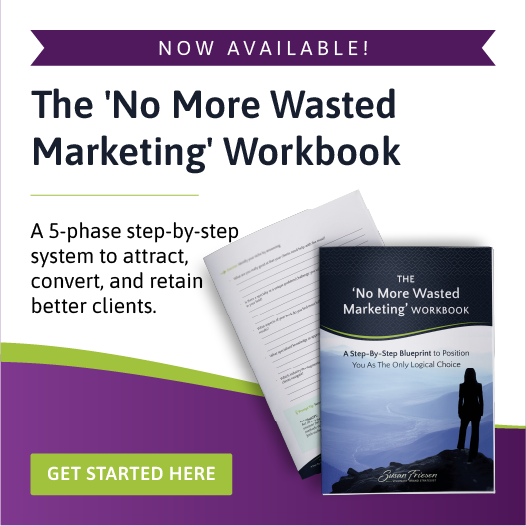
And that’s exactly what you’ll get in The ‘No More Wasted Marketing’ Workbook, a step-by-step guide to help you refine your brand positioning and uncover what makes your business stand out.
This isn’t just a workbook. It’s your roadmap to:
- Marketing that finally feels like it's working
- Offers that feel like a perfect fit (because they are)
- Magnetic messaging that speaks to your ideal client
- A brand that builds trust and authority at first glance
So, if you’re tired of attracting the wrong clients, or none at all, it’s time to change that.
Download The ‘No More Wasted Marketing’ Workbook Now and start building the kind of brand that your best clients just can’t ignore.

About the Author, Susan Friesen
Located in the lower mainland of B.C., Susan Friesen is a visionary brand strategist, entrepreneur, and founder of British Columbia’s premiere boutique web development and digital marketing agency, eVision Media.
With over 20 years of experience in the industry, she is an expert in helping businesses establish their online presence and create a strong brand identity.
Her passion for empowering entrepreneurs and small business owners to succeed in the digital world has earned her a reputation as a leading authority in the branding and marketing industry.
Visit www.BrandIdentitySteps.com and download your FREE guide: "Unlocking Customer Trust and Business Growth: Your 7-Step Guide to Defining a Compelling Brand Identity that Appeals to Your Perfect Clients".