How a convincing invitation made me question credibility
Have you ever received an email from a complete stranger who seemed to know an awful lot about you?
Not just your name or what you do for a living, but details about your work, your beliefs, and what makes your business different from others in your industry.
I received one of those emails recently, and just as I was about to delete it, something compelled me to take a closer look.
The sender seemed to know so much about my work that I actually wondered whether she’d read my newly published book.
And that’s when I got sucked in.
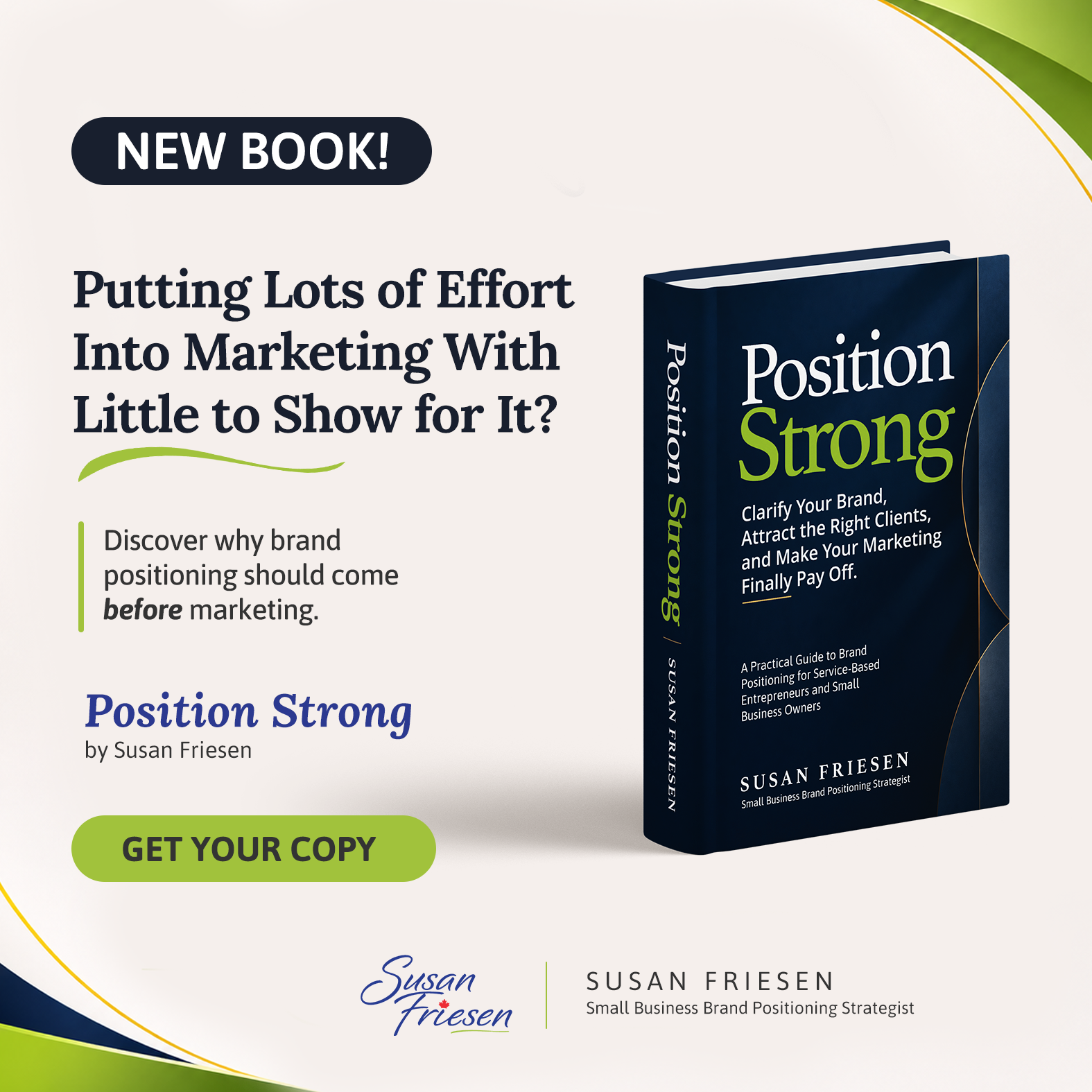
My book, Position Strong, had only been published the day before when I received an invitation from someone named Samantha Schneider, who introduced herself as the Community Lead for a Goodreads reading group called The Book You Like Most.
She was inviting me to have my book featured in their 2026 Author Spotlight Program, supposedly reaching a reading community with more than 50,000 members!
Feeling quite proud of myself, I eagerly read further.
One sentence in particular caught my eye:
“I did my homework before writing. I know this is not just another marketing book.”
Okay, that’s interesting. What exactly had she learned about my book?
As I continued reading, she described my approach to helping business owners understand why their marketing isn’t producing the results they want. She even included this statement:
“If your marketing isn’t producing the results you expected, look at your brand positioning before you change anything else.”
Well, that’s pretty much the central message I’ve been sharing for years, and one of the reasons I wrote Position Strong in the first place.
The rest of her email was just as detailed. She seemed to understand who I work with and why I believe business owners need to look at their brand positioning before spending more money promoting themselves.
I Did a Little Homework of My Own
After working in digital marketing since 1999, I’ve seen my share of questionable offers and people trying to get something from unsuspecting business owners.
So, rather than getting caught up in the excitement of a possible promotional opportunity for my book, I decided to investigate.
Interestingly, the Goodreads reading group appeared to be real. It had roughly 51,000 members, which matched what was said in the email.
But as I kept digging, I came across reports of suspicious author promotions using the same group’s name and similar invitations. There were also warnings about people impersonating Goodreads communities to approach authors.
I couldn’t verify that Samantha actually represented the group, or that the Author Spotlight Program she’d described was legitimate.
So that was enough for me, and I went ahead and clicked delete.
How Did She Know So Much About My Book?
I am pretty certain that email was written using AI. If it wasn’t, I’d be shocked!
The observations were so specific and detailed for a book that had been available for barely 24 hours.
I started wondering how much information someone could gather about me and my book without ever reading the manuscript.
As it turns out, quite a bit.
I’ve been writing articles, recording videos, and sharing my perspective on brand positioning for years. There’s a substantial amount of information about my work online.
With the book launch came even more. Book descriptions, promotional posts, author bios, interviews, and website content all explain what Position Strong is about.
Someone using AI could easily pull together those pieces of information and create a remarkably accurate message.
And that’s what fascinated me. The person sending the email didn’t necessarily need to know anything about my book firsthand to sound as though they’d studied it.
When Does Personalization Become a Reason to Trust Someone?
I think most of us appreciate it when someone takes the time to learn about our business before reaching out.
When an email references something specific we’ve written or understands an important part of our work, it feels more personal. We’re more inclined to pay attention.
And often, rightfully so. There are people who genuinely do their research because they’re interested in building professional relationships.
But what happens when AI can create that same impression in minutes?
I’ve always believed that trust plays an important role in why people choose one business over another. It’s something I talk about ad nauseam!
Yet this experience made me wonder how easily we can mistake a convincing message for genuine credibility.
I use AI in my own work, and I appreciate what it can do. There’s nothing wrong with using it to research someone or help write a more personal message.
But anyone can sound knowledgeable with a little help from AI these days. Whether they genuinely know what they’re talking about, or have a legitimate reason for approaching you, is another matter entirely.
Why This Email Got Me Thinking
I still wonder whether the person behind that email actually knew anything about my book beyond what could be found online or through AI.
Maybe they did. I doubt it.
What interests me most is that the email got my attention because the sender appeared to understand my work. I think it’s a natural response. We tend to feel more comfortable with people who seem to understand us, even when we know very little about them.
And I suspect business owners will encounter more of these convincing messages, whether they’re invitations to collaborate, partnership opportunities, or offers from someone claiming to have exactly what their business needs.
The next time someone approaches me with a message that seems almost too perfectly tailored to me and my business, I’ll still be curious.
But I’ll be paying just as much attention to who’s behind it as I do to what they’ve written.
Until next time, I’m Susan Friesen, your small business brand positioning strategist, inviting you to stay clear, stay focused, and stand out.
P.S. The irony of this experience isn’t lost on me. My book, Position Strong, explores how people form perceptions of a business and what contributes to earning their trust. I certainly didn’t expect to be thinking about those very ideas quite this way the day after publishing it! If you’d like to learn more about the book, visit PositionStrongBook.com.
Ready to Attract Better Clients Without Working Harder?

You don’t need another crash course in funnels or hacks. You need clarity.
And that’s exactly what you’ll get in The ‘No More Wasted Marketing’ Workbook, a step-by-step guide to help you refine your brand positioning and uncover what makes your business stand out.
This isn’t just a workbook. It’s your roadmap to:
- Marketing that finally feels like it's working
- Offers that feel like a perfect fit (because they are)
- Magnetic messaging that speaks to your ideal client
- A brand that builds trust and authority at first glance
So, if you’re tired of attracting the wrong clients, or none at all, it’s time to change that.
Download The ‘No More Wasted Marketing’ Workbook Now and start building the kind of brand that your best clients just can’t ignore.

About the Author, Susan Friesen
Located in the lower mainland of B.C., Susan Friesen is a visionary brand strategist, entrepreneur, and founder of British Columbia’s premiere boutique web development and digital marketing agency, eVision Media.
With over 20 years of experience in the industry, she is an expert in helping businesses establish their online presence and create a strong brand identity.
Her passion for empowering entrepreneurs and small business owners to succeed in the digital world has earned her a reputation as a leading authority in the branding and marketing industry.
Visit www.BrandIdentitySteps.com and download your FREE guide: "Unlocking Customer Trust and Business Growth: Your 7-Step Guide to Defining a Compelling Brand Identity that Appeals to Your Perfect Clients".