
Why Is Following Marketing Trends so Frustrating?
Following marketing trends is frustrating because what works for one business will not always work for another.
From the outside, it’s easy to assume that a podcast, webinar, social media strategy, or AI content plan caused someone’s success, but what’s usually missing from that picture is deeper context.
In any case, when business owners copy the visible tactic without understanding the structure behind it, the results often fall short, which leads to wasted time, wasted effort, and more confusion about what to do next.
Key Takeaways:
- Positioning, trust, reputation, and message clarity often influence results more than the tactic itself.
- Chasing trends can trap business owners in a cycle of trying more tactics without fixing the deeper issue.
- Visible marketing success can be misleading because you only see the tactic, not the foundation behind it.
- Better marketing decisions come from asking why a strategy works for a business, not just whether it looks successful.
- Copying someone else’s marketing strategy rarely produces the same outcome when the business context is different.
It’s easy to see why so many business owners feel tempted to follow what seems to be working for someone else.
One person starts a podcast and quickly becomes more visible, someone else builds a strong social media following, and another runs webinars or starts using AI to create content.
From the outside, it can all look very simple. They picked a strategy, used it well, and got results.
So, naturally, other business owners think they should be doing that, too.
And that response makes sense.
When you’re trying to grow your business, get noticed, and stop wasting time on things that go nowhere, that kind of visible success can feel like proof.
What’s more, it can make a tactic look like the answer and make following marketing trends feel like the smartest next step.
But this is also where frustration often begins.
Because what you’re seeing is usually only the visible part of the story.
You’re seeing the tactic, but you’re not seeing the structure behind it.
And when that part is missing, it becomes very easy to copy the surface of someone else’s strategy without understanding why it worked for them in the first place.
This explains why following marketing trends often leads to disappointment.
The tactic may be real, and the results may be real. But the conditions behind those results are often very different from your own.
Why Following Marketing Trends Feels So Tempting
Most business owners are not looking for distractions. They’re looking for traction.
They want something that helps them get noticed, build trust, attract better leads, and finally feel like their marketing is moving in the right direction.
And when a strategy looks like it’s working for someone else, it can feel safer than figuring everything out on your own.
Moreover, it can also feel faster. Why spend weeks thinking through a decision when someone else appears to have already proven what works?
This is especially true when you’re already tired of second-guessing your marketing.
Maybe you’ve spent money on things that didn’t perform the way you hoped.
And perhaps you were told to post more, do more, try more, and still haven’t seen the kind of results that make your efforts feel worthwhile.
In that kind of environment, following marketing trends can feel practical, and it can feel like progress.
But visible activity and real progress are not always the same thing.
A strategy can look successful from the outside while telling you very little about whether it would work for your business.
What People Usually See
This is where the illusion starts.
People see the podcast, the webinar, the polished content, the steady stream of social posts, and the person who seems to be everywhere at once.
But what they don’t see is the context. And here’s what often gets missed:
- How strong the messaging is
- The quality of the offer behind the content
- How long that person has been building trust
- Whether that business already had an established audience before trying that tactic
- The reputation, relationships, referrals, or years of consistency that may already be supporting the results you’re seeing
They only see the public-facing activity. And that is where many wrong assumptions begin.
Because when all you can see is the output, it’s easy to assume the output created the result.
It’s easy to believe that the webinar built the authority, the podcast created the trust, and the content drove the growth.
Truth be told, sometimes those tools do help move things forward.
But often, they’re not the full reason the strategy worked. They’re simply the visible expression of something deeper that was already in place.
Read: The Real Reason You’re Wasting Money on Marketing

If you’ve ever felt like your marketing should be working better than it is, then this article offers a helpful next read.
It connects directly to this topic by showing how the real issue is often not the tactic itself, but the lack of clarity underneath it, especially when it comes to your brand positioning.
Read it to learn why some marketing efforts underperform even when they look right on the surface, and what needs to be strengthened first.
What Is Usually Invisible
The real reason a marketing strategy works is often tied to things that are much harder to see from the outside. This includes things like:
- Reputation
- Offer strength
- Audience trust
- Message clarity
- Business model
- Brand positioning
These aren’t flashy things. And they don’t always make exciting social media posts.
But they shape outcomes far more than most people realize.
Take webinars, for example.
A webinar can perform extremely well for one business yet fall completely flat for another.
But that doesn’t necessarily mean the webinar itself is brilliant in one case and flawed in the other.
It may simply mean one business already has an audience that knows, trusts, and values what they have to say.
And it may mean their positioning is more clear, so the right people instantly understand why the topic matters and why that person is worth listening to.
Now compare that to a business that tries the same format without that foundation in place.
They may create a thoughtful webinar, promote it properly, and work hard to make it useful.
But if the audience is still unclear about whom they help, what makes them different, or why they should pay attention, then the results will likely be very different.
The same principle applies to almost every tactic people try to copy.
A podcast isn’t just a podcast.
For one business, it’s a trust-building tool backed by credibility, consistency, and a warm audience.
For another, it becomes a time-consuming content project with very little return.
AI content is no different.
Used well, AI can support efficiency and consistency.
But when it’s used without clear brand positioning or a defined voice, it often produces generic content that sounds polished but does very little to build trust.
Why Copying the Tactic Rarely Produces the Same Result
This is where frustration really starts to build.
A business owner sees a strategy working for someone else, so they copy the format.
They put in the effort, expecting a similar kind of lift, but then the results don’t come.
At that point, it’s very easy to conclude that something is wrong.
Maybe the strategy is overhyped, the platform is too crowded, or the audience isn’t responsive.
Or maybe marketing just doesn’t work the way everyone says it does.
At this point, people tend to make it personal.
They start to think they’re not visible enough, need to work harder, or that they just aren’t good at marketing. But often, the issue is much simpler than that.
The copied strategy was never supported by the same context. And without that context, the results were never likely to match.
All things considered, this is one of the biggest problems with following marketing trends.
Trends train people to look at what’s visible first, encouraging imitation before understanding and action before evaluation.
That can feel productive in the short term.
But over time, it usually creates more confusion and frustration than momentum.
The Cycle That Follows
This is how many businesses end up stuck.
They try one strategy and it underperforms. So, they move on to the next, and then the next.
The problem isn’t that these strategies are bad. It’s that the decision making stays stuck at the tactic level.
Each new attempt is treated like a possible fix, while the deeper structure remains untouched.
That creates a frustrating experience, not only because the results stay inconsistent, but because you start to lose trust in your own judgment.
You start to feel like you’re always behind, always catching up, and always trying to decode what successful people are doing.
But this is exhausting, and it also leads to wasted time, wasted money, and more self-doubt than most people care to admit.
At any rate, the main issue here is that you’re making decisions based on what’s visible, rather than what’s actually appropriate for your business.
Better Questions to Ask
Instead of asking if you should be following a specific marketing trend, a better question to ask is what is making that strategy work for that business?
That question changes everything because it slows the process down in a useful way, creates room for analysis instead of reaction, and helps you look beyond the tactic and examine the conditions around it.
For example, when you’re evaluating a marketing tactic, here are some questions you should ask about the business that’s using it:
- How clear is their positioning?
- How much trust is already there?
- What stage of growth are they in?
- How established is their reputation?
- How strong is the offer behind the tactic?
- What kind of business model are they running?
Those questions may not be as exciting as the tactic itself, but I assure you, they’re far more useful.
They’ll help you decide whether a particular strategy is a good fit for your business right now, rather than just an attractive example of someone else’s success.
Why Structure Matters More Than Trends
The businesses that tend to get more consistent results aren’t always the ones doing the most.
The truth is they’re often the ones whose marketing choices best fit their structure.
Their positioning is clear, their message makes sense, their offer is aligned with what their audience wants, and their tactics are chosen on purpose, not copied out of urgency.
And that explains why the same tool can produce vastly different results from one business to the next.
No matter how you slice it, a strategy works best when it fits the business it’s being used for.
This is also why clear positioning changes the entire marketing experience.
When your positioning is clear, you’re better able to judge which strategies support your business and which ones only look appealing on the surface.
You stop chasing marketing trends, stop assuming that what worked for someone else should automatically be a part of your strategy, and you start making choices with more discernment and more confidence.
That doesn’t mean you have to ignore trends completely. It means you should stop treating them like answers.
A trend may point to a useful tool, and it may show you how the market is shifting.
But it should never replace common sense and strategic judgment.
If you’re tired of chasing marketing tactics that look promising but never seem to produce the results you hoped for, it’s time to stop guessing and look at the bigger picture.
Book a free consultation today and let’s talk about what’s really shaping your marketing results, and what needs to change so your strategy fits your business.
To your business success,
Susan Friesen
P.S. If you liked the article, you might want to subscribe to our newsletter. We publish tons of valuable content to help you learn more about marketing, and subscribing is the best way to ensure you don’t miss out. Additionally, if you’d like to learn more about building a search engine optimized website, click here for our free website guide.
Ready to Attract Better Clients Without Working Harder?

You don’t need another crash course in funnels or hacks. You need clarity.
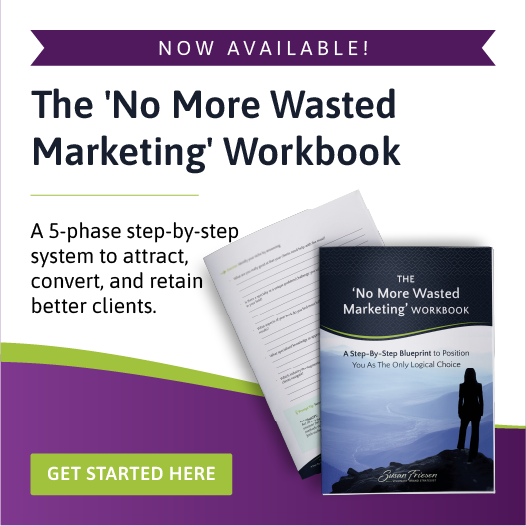
And that’s exactly what you’ll get in The ‘No More Wasted Marketing’ Workbook, a step-by-step guide to help you refine your brand positioning and uncover what makes your business stand out.
This isn’t just a workbook. It’s your roadmap to:
- Marketing that finally feels like it's working
- Offers that feel like a perfect fit (because they are)
- Magnetic messaging that speaks to your ideal client
- A brand that builds trust and authority at first glance
So, if you’re tired of attracting the wrong clients, or none at all, it’s time to change that.
Download The ‘No More Wasted Marketing’ Workbook Now and start building the kind of brand that your best clients just can’t ignore.

About the Author, Susan Friesen
Located in the lower mainland of B.C., Susan Friesen is a visionary brand strategist, entrepreneur, and founder of British Columbia’s premiere boutique web development and digital marketing agency, eVision Media.
With over 20 years of experience in the industry, she is an expert in helping businesses establish their online presence and create a strong brand identity.
Her passion for empowering entrepreneurs and small business owners to succeed in the digital world has earned her a reputation as a leading authority in the branding and marketing industry.
Visit www.BrandIdentitySteps.com and download your FREE guide: "Unlocking Customer Trust and Business Growth: Your 7-Step Guide to Defining a Compelling Brand Identity that Appeals to Your Perfect Clients".