Imagine you’ve spent the last six months putting together a new online program.
It’s a lot of work, isn’t it? From working out the lessons and creating the worksheets, to recording the videos, figuring out what to charge, and setting up the page where people can enrol.
But it sure is exciting to get all of that done! I know that a lot of thought and effort went into making sure this new offering is something your target market will truly benefit from.
And now that everything is pretty much ready, the next natural step is to focus on the marketing.
You have options to consider here – you could hire a marketing person or agency, or ask your VA to help with sending out some emails, do some social media posts, and maybe even pay for some ads.
Or you figure you can take care of the marketing yourself.
But hang on – I have a question I want you to think about.
Why are you only starting to tell people about it now?
Have you thought about how many marketing opportunities you might have missed simply because you waited until your program was ready to launch?
Hi, I’m Susan Friesen, a small business brand positioning strategist, founder of eVision Media, and creator of The Position Strong Method.
Welcome to another episode of Stand Out & Thrive, where I share insights to help you build a business that people understand, trust, and want to work with.
If you’re new here, I invite you to subscribe to my channel for more practical advice on brand positioning and small business marketing.
Now, the reason this topic is on my mind is because I’m going through something similar myself right now.
As you may know, I’ve written a book called Position Strong, and it’s launching on November 20th.
And while I’ve spent a considerable amount of time writing it, I’ve also been spending a ton of time preparing for the launch.
In fact, I had a meeting just yesterday with someone who’s helping with the publishing and launch process.
At one point, she commented on how much I’d already accomplished.
She seemed quite surprised, actually.
And it got me thinking about something I hadn’t really considered before.
For me, planning all these marketing activities is quite natural. I’ve been doing this professionally for more than 25 years, so I have a pretty good understanding of what needs to happen, what depends on something else being ready, and how all the pieces fit together.
That doesn’t mean I have everything figured out, believe me that is not the case!
Turns out there’s a lot involved in launching a book, and I’m learning plenty about the publishing side of things as I go.
I’ve also got a team helping me, and I couldn’t possibly do all of this on my own.
But what I do have is an understanding of WHY we’re doing the marketing activities we’re doing.
And that’s what I want to talk about today.
Your launch shouldn’t be the first time people hear about your offer
Now, you might be thinking about some of those well-known experts who seem to announce a new program, and suddenly their ads are everywhere.
And yes, that kind of launch can work.
But what you may not see is the audience they’ve already built, the years they’ve spent establishing their reputation, or the sizeable advertising budget they have behind that campaign.
That’s a very different starting point from a small business owner launching a new program to an audience that may not even know it’s coming.
If you don’t already have that visibility and trust, you can’t expect a few weeks of promotion to produce the same results.
Let’s go back to that online program you’ve been creating.
You’ve been working away on it for months. You know what it covers, who it’s meant to help, and why you believe it’s valuable.
But what does your audience know?
Do they even know you’re creating it?
Have you talked about the problem it’s intended to solve?
Have you shared any of the thought process behind it?
Have you invited people into the conversation or given them an opportunity to express interest?
Or are they going to receive an email one day announcing that enrolment is open?
Now, there’s nothing wrong with a launch announcement. Of course you need to tell people when something is available.
But that announcement shouldn’t have to do all the work of introducing the program, explaining its value, answering people’s questions, and persuading them to buy.
That’s a lot to expect from a few emails and social media posts, especially when you’re asking someone to make a decent financial investment.
People often need time to understand what you’re offering and decide whether it’s relevant to them.
And that interest can start developing long before the program is ready to be purchased.
For example, let’s say you’re a naturopathic doctor creating an online program to help women going through perimenopause better understand the changes happening in their bodies.
You have an opportunity to start talking about this subject months before enrolment opens.
Share some of the questions women commonly ask you about perimenopause.
Talk about why symptoms such as changes in sleep, mood, or menstrual cycles can leave women wondering what’s happening to their bodies.
Ask your audience what they wish they’d understood earlier about this stage of life.
Explain what inspired you to create the program and why you believe women need more accessible information and support.
None of that requires the program to be 100% complete or have the sales page ready to accept purchases or have a fine-tuned promotional campaign all laid out.
You’re sharing your expertise, learning more about what your audience needs, and giving people a chance to become familiar with the subject matter in your offer.
And when the program is ready, they aren’t hearing about it for the first time.
This is something I’ve seen from the agency side, too
Over the years at eVision Media, we’ve helped business owners promote all kinds of things, including books, programs, memberships, and new services.
And one thing I’ve come to realize is how much opportunity there is before the actual launch.
Sometimes someone comes to a marketing agency when everything is ready to sell.
They have a product or program they’re proud of, and understandably, they want people to buy it.
So the immediate conversation becomes about advertising, emails, social media, and how quickly the promotion can get started.
But I often find myself thinking about what could have happened in the months leading up to that point.
Those opportunities aren’t necessarily lost forever; often I infuse them into the marketing campaign as much as possible, but they can be difficult to recreate when the launch is already underway, and there’s pressure to generate sales.
Which is why I encourage business owners to start thinking about how they’ll introduce a new offer to their audience while they’re still creating it.
And all of this needs a foundation
Now, before you rush off and start posting about your next program six months in advance, there’s another piece we need to talk about.
All that early marketing needs to be based on something.
You need to understand who the program is for, what they’re struggling with, why you’ve created it, and what makes your approach worth considering.
Otherwise, you could spend months talking about your program without giving people a clear reason to care.
This is one of the reasons I’m such a strong advocate for getting your brand positioning sorted out before investing heavily in promotion.
With my book, for example, we’re not just putting together a bunch of launch activities because that’s what authors are supposed to do.
We’re looking at who the book is meant to help, what I want readers to understand, and how it connects to the work I’ve been doing with small business owners for years.
That’s guiding the topics I’m talking about in these videos, what I’m sharing with my community, the information on the website, and how we’re introducing the book to potential readers.
I still have plenty to do before November 20th.
And of course, I don’t know exactly how the launch will go.
But I do know we’re giving people opportunities to hear about the book, understand what it’s about, and decide whether it’s something they’d like to read.
And that’s a much better place to be than starting those conversations on launch day.
So, if you’ve got a new online program, membership, book, or service you’re planning to launch, I’d encourage you to think beyond the actual launch date.
Ask yourself what your audience needs to know before you invite them to buy.
What would help them recognize that your offer is relevant to them?
What could you share about your experience, your approach, or the reasons you’re creating it?
You don’t need to have everything finished before you start those conversations.
And you don’t need an elaborate marketing campaign to begin sharing useful information and building interest.
Because the goal isn’t simply to have a marketing campaign ready when your program launches.
It’s to make sure you’ve been giving people good reasons to become interested well before that day arrives.
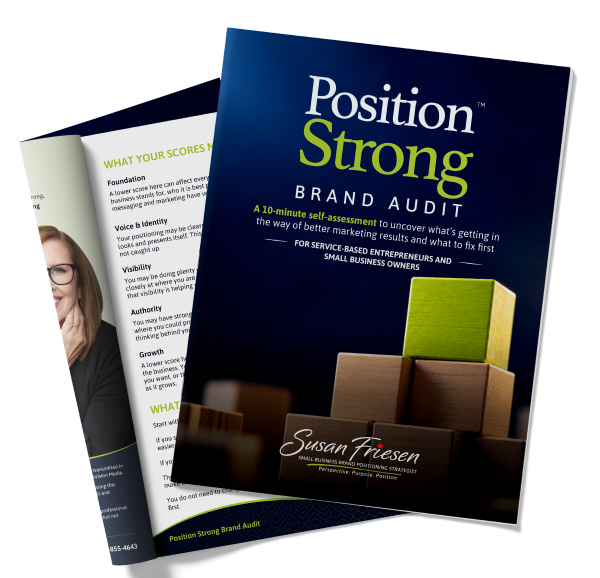
And if you’re unsure whether your business has the positioning and messaging foundation to support that kind of marketing, I invite you to take The Position Strong Brand Audit.
It’s a free resource designed to help you take a closer look at how your business is positioned and identify areas that may need attention before you invest more in marketing.
You’ll find it at www.PositionStrongBrandAudit.com, and I’ll put the link in the description below.
And when you sign up, you’ll also be among the first to know when my new book, Position Strong, is available on November 20th.
Thanks for joining me today.
Until next time, I’m Susan Friesen, your small business brand positioning strategist, inviting you to stay clear, stay focused, and stand out.
Ready to Attract Better Clients Without Working Harder?

You don’t need another crash course in funnels or hacks. You need clarity.
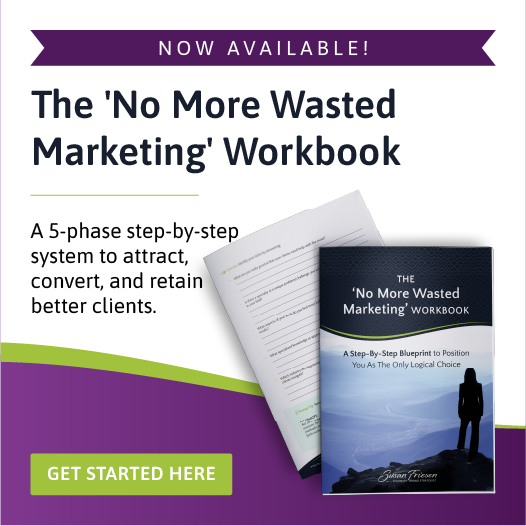
And that’s exactly what you’ll get in The ‘No More Wasted Marketing’ Workbook, a step-by-step guide to help you refine your brand positioning and uncover what makes your business stand out.
This isn’t just a workbook. It’s your roadmap to:
- Marketing that finally feels like it's working
- Offers that feel like a perfect fit (because they are)
- Magnetic messaging that speaks to your ideal client
- A brand that builds trust and authority at first glance
So, if you’re tired of attracting the wrong clients, or none at all, it’s time to change that.
Download The ‘No More Wasted Marketing’ Workbook Now and start building the kind of brand that your best clients just can’t ignore.

About the Author, Susan Friesen
Located in the lower mainland of B.C., Susan Friesen is a visionary brand strategist, entrepreneur, and founder of British Columbia’s premiere boutique web development and digital marketing agency, eVision Media.
With over 20 years of experience in the industry, she is an expert in helping businesses establish their online presence and create a strong brand identity.
Her passion for empowering entrepreneurs and small business owners to succeed in the digital world has earned her a reputation as a leading authority in the branding and marketing industry.
Visit www.BrandIdentitySteps.com and download your FREE guide: "Unlocking Customer Trust and Business Growth: Your 7-Step Guide to Defining a Compelling Brand Identity that Appeals to Your Perfect Clients".