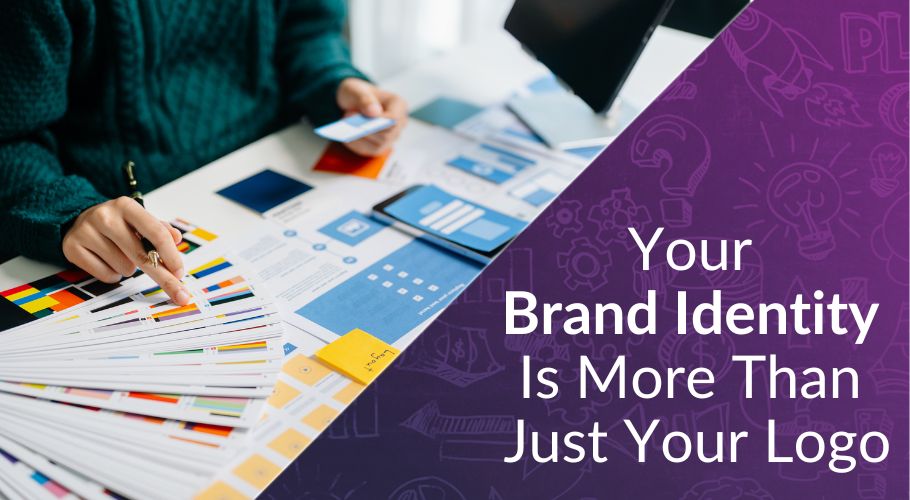
A lot of business owners think their brand identity starts and ends with a logo.
Maybe you’ve felt this way, too. You pick a colour palette, choose a symbol you like, and assume you’re all set and ready to go.
But over time, you notice that something doesn’t feel quite right.
Your logo might look polished, but your marketing is landing on deaf ears.
What you might not realize is that your tone might be shifting from platform to platform, your visuals come across as inconsistent, and your message changes depending on the day.
All of this causes not only confusion, but more importantly, distrust.
And that’s because your logo is only a small part of a much bigger picture.
A strong brand identity is what shapes how people see you, remember you, and decide whether they should trust you as being a right fit for them. It reflects the personality of your business, the values you stand for, and the voice your audience connects with.
When that identity is fully formed, your marketing becomes clearer, more consistent, and more recognizable.
But when you’re relying on visuals alone to carry your brand, even the best logo in the world can’t fix the confusion that follows.
So, if you want to understand what your brand identity really is, how it connects to the experience you create, and what to focus on if you want your branding to actually work, then keep reading to learn more.
What Your Brand Identity Really Is
Your brand identity is the full expression of who you are as a business.
It’s what people see, hear, feel and experience when they interact with you. It’s the impression they get before they ever reach out. And it’s what shapes their expectations and trust.
All things considered, a strong brand identity is made up of:
- Your visual expression
This includes your colours, fonts, imagery, logo, and overall aesthetic. These elements create visual recognition and help people recognize your brand at a glance. - Your verbal expression
This is your voice and tone. It’s how you sound in your emails, website copy, social media posts, and client interactions. It’s the personality behind your words. - Your emotional expression
This is where your values, personality, and promise come in. It’s the feeling people get when they encounter your brand. It’s the trust you build and the connection you create.
All three of these elements work together to form the identity of your brand, and when they’re aligned, your business will feel cohesive, confident, and trustworthy.
But when they aren’t, your branding will feel scattered and unclear.
Why Logos Alone Don’t Create Trust
Your logo might be beautiful, modern, clever, or professionally designed, but a logo alone cannot communicate your personality, your values, or the experience you offer.
It can’t express your tone or convey the transformation you help clients achieve. And it certainly can’t speak for you when the rest of your branding doesn’t match.
Think about the last time you visited a website that looked polished but didn’t feel trustworthy. Even with a strong logo, you probably clicked away.
And that’s because people don’t make decisions based on logos.
They make decisions based on emotional alignment. They want their experience with you to feel consistent from the moment they land on your site to the moment they work with you.
But if your visuals look one way and your tone or behaviour tells a different story, trust tends to break down. And once trust breaks, your logo can’t save the relationship.
Trust is built through clarity, consistency, and presence – not a single design element.
The Visual Side of Brand Identity
Visual consistency plays a significant role in how people recognize and remember your business.
But building a strong visual brand involves more than choosing a logo and some colours.
Here’s what your visual brand should include:
- Consistent typography
- A cohesive colour palette
- A recognizable layout approach
- Repeating graphic or design elements
- A clear photography and imagery style
These pieces work together to create a sense of harmony. But when they’re inconsistent, your brand looks unstable, as it feels like it’s changing from one thing to another.
And that instability creates doubt in your audience’s mind, even if they can’t articulate why.
Visual consistency doesn’t mean everything needs to look identical. But what it does mean is that your imagery, fonts, colours, and design need to feel like they belong in the same world.
The Voice Side of Brand Identity
Your brand voice is one of the most overlooked parts of your brand identity.
It’s not what you say. It’s how you say it. It’s the personality behind your words, the tone you use, and the emotions you create.
And this will determine whether you sound warm and relatable or more like a corporate brochure.
The truth is most business owners don’t intentionally define their brand voice.
But you’ve got to take the time to do this because it’s how your audience gets to know you, and how they decide if they should trust you.
If you want your brand identity to work, though, your voice needs to reflect who you are, and not who you think you should sound like.
Here are a few questions to help clarify your voice:
- What words or phrases align with who you are?
- How do you naturally communicate with clients?
- What tone of voice feels most true to your personality?
- What do you want people to feel when they read your content?
No matter how you slice it, you’ve got to get this right because when your voice is clear, your identity becomes instantly recognizable.
The Values and Personality Side of Brand Identity
Your brand identity isn’t only about visuals and tone. It’s also rooted in your values, your personality, and the experience you promise.
For one thing, values guide your decisions, as they influence how you respond to challenges, how you communicate, and how you treat your clients.
And when your values are clear, your identity becomes much more grounded and authentic.
What’s more, personality shapes the emotional experience your customers have with you.
Are you calm and thoughtful? Energetic and direct? Warm and conversational?
Whatever the case, your personality helps your audience understand what it will feel like to work with you.
And when your values and personality are clear, then your brand’s identity becomes something people can feel, not just see.
Read: How to Define Brand Identity and Maintain Consistency in All Your Marketing Materials

If you’d like more practical ways to define your brand identity, and keep it consistent across everything you create, then this is a must-read article.
It expands on several elements that often get overlooked and shows you how to strengthen your brand’s presence with simple, repeatable steps.
So, if your branding feels scattered or disconnected, this guide will help you bring everything together, so your clients will instantly recognize your business whenever they see you.
How to Strengthen Your Brand Identity Without a Full Rebrand
Despite what you may think, you don’t need to start from scratch to create a stronger brand identity.
The truth is most small businesses don’t need a huge overhaul. What they need is better alignment.
This can be achieved through small adjustments, made with intention, which can make your identity feel clearer, more consistent, and more reflective of who you are today.
Here are a few ways to strengthen your brand identity without going through a full rebrand.
Review Your Visuals for Consistency
Start by taking a slow, honest look at what you’re putting out into the world.
Compare your website, social media graphics, newsletters, business cards, proposals, and any other touchpoints. Do they all feel like they belong to the same business?
If your colours look different from platform to platform or your graphics don’t share a common style, your brand identity becomes hard to recognize.
And this makes visual consistency very important, as it helps to build memory, so people can quickly identify your business even before they read a single word.
A simple way to start improving this is by choosing a small set of colours, fonts, and imagery styles that feel aligned with your personality, and sticking with them.
You don’t need fifty colours or five different font families. You need a cohesive set that feels like you.
Audit Your Voice Across Your Channels
Your brand identity is also shaped by how you sound.
So, make sure to read your last few emails, social posts, and pieces of website copy.
Does the tone feel scattered? Does it change depending on your mood or which platform you’re writing for? And most importantly, does it sound like you?
When your voice isn’t consistent, people can’t get a sense of your personality. They don’t know what to expect, and that creates distance.
But a clear brand voice creates comfort and trust. It helps people feel like they already know you, even before they reach out.
To fix this, choose three to five words that describe how you want your brand to sound.
Pick words that reflect who you are, not who you think you should be, and then use those words as a filter for everything you write going forward.
Revisit the Values That Guide You
Your values are the foundation for the emotional experience you create, as they shape how you respond to clients, how you communicate, and how you make decisions.
But whatever your values are, make sure they show up in your content and in your actions.
Because if your values aren’t visible, then your brand’s identity will inevitably lose depth, and this is extremely important, as people want to work with businesses that feel grounded, consistent, and true to themselves.
So, take a moment to write your core values down and ask yourself where they’re missing from your marketing or client experience.
Some simple adjustments can help you bring them to life through your tone, visuals, and messaging.
Clarify the Brand Promise Your Clients Rely On
Your brand promise is the experience you deliver every time someone works with you. It’s what people can count on.
And when you’re clear about this promise, your identity feels stable and predictable in the best way.
Think about what your clients say they appreciate most.
Maybe it’s your reliability, your thoroughness, your calm reassurance, or your ability to simplify complicated things.
Whatever it is, choose one core promise that reflects what you consistently deliver, and make it part of your brand identity.
Because when clients know what to expect, trust grows, and trust strengthens every aspect of your brand.
Create a Simple, Practical Style Guide
Despite what you might have been told, you don’t need a 50-page-long brand book.
Believe it or not, a one-page style guide can work wonders.
Make sure to include your colours, fonts, visual style notes, tone reminders, and a short description of your personality. But keep it simple and easy to follow.
This is especially important if you work with virtual assistants, contractors, designers, or social media managers, as this kind of style guide helps to ensure everyone remains aligned, and it protects your identity from changing over time.
Ready to Strengthen Your Brand Identity?
Start with a deep dive into your brand with The ‘No More Wasted Marketing’ Workbook. It’ll help you clarify your values, tone, visuals, and personality, so your brand identity finally reflects the true you.
To your business success,
Susan Friesen
P.S. If you liked the article, you might want to subscribe to our newsletter. We publish tons of valuable content to help you learn more about marketing, and subscribing is the best way to ensure you don’t miss out. Additionally, if you’d like to learn more about building a search engine optimized website, click here for our free website guide.
Ready to Attract Better Clients Without Working Harder?

You don’t need another crash course in funnels or hacks. You need clarity.
And that’s exactly what you’ll get in The ‘No More Wasted Marketing’ Workbook, a step-by-step guide to help you refine your brand positioning and uncover what makes your business stand out.
This isn’t just a workbook. It’s your roadmap to:
- Marketing that finally feels like it's working
- Offers that feel like a perfect fit (because they are)
- Magnetic messaging that speaks to your ideal client
- A brand that builds trust and authority at first glance
So, if you’re tired of attracting the wrong clients, or none at all, it’s time to change that.
Download The ‘No More Wasted Marketing’ Workbook Now and start building the kind of brand that your best clients just can’t ignore.

About the Author, Susan Friesen
Located in the lower mainland of B.C., Susan Friesen is a visionary brand strategist, entrepreneur, and founder of British Columbia’s premiere boutique web development and digital marketing agency, eVision Media.
With over 20 years of experience in the industry, she is an expert in helping businesses establish their online presence and create a strong brand identity.
Her passion for empowering entrepreneurs and small business owners to succeed in the digital world has earned her a reputation as a leading authority in the branding and marketing industry.
Visit www.BrandIdentitySteps.com and download your FREE guide: "Unlocking Customer Trust and Business Growth: Your 7-Step Guide to Defining a Compelling Brand Identity that Appeals to Your Perfect Clients".